December 11, 2025
the next: can fashion, beauty and women's sports co-exist?
The [female] athlete project podcast by Chloe Dalton


THE NEXT is a new monthly podcast from The Female Athlete Project.
Each episode, futurist and former athlete Reanna Browne joins Chloe and Bez to explore what’s changing in women’s sport, before it hits the headlines. We shine a light on the pockets of the future already here - the signals of change that are quietly [or not-so-quietly] reshaping women's sport in the present. Not to predict what’s coming, but to notice what’s already in motion.
What is Rea noticing? Fashion, Beauty & Women's Sports
“The convergence between fashion, beauty and women’s sport. It’s really hard to not notice it. This is really about a deeper cultural shift that’s starting to change both industries, both ways.”
Here are five signals [pockets of this future in the present] that Rea is noticing this month:
1. Women’s sport, fashion, beauty & apparel are growing together
"These big industries have been growing in parallel, and now they're starting to entangle and become part of the bigger ecosystem."
Just take the numbers.
Elite women's sport is worth $2.35 billion in 2025 (300% growth since 2020).
Meanwhile, the global beauty industry is worth roughly $677 billion in 2025 and is hungry for new stories and markets.
But beauty brands aren’t dabbling in the women's sports space – they’re all in.
Glossier: The Official Beauty Partner of WNBA and USA Basketball
Charlotte Tilbury - The official partner of F1 Academy (first female-founded beauty brand in motorsport)
COVERGIRL: Official cosmetics sponsor of the Chicago Sky
Sephora: Unrivaled Basketball League's official beauty partner
"They’re not just these short-term or one-off deals." Chloe Dalton
And here's the why.
-
Female athletes drive 2x social engagement vs male athletes
-
Women's sport sponsorships growing 12% vs 8% men's - 50% faster
-
67% of fans buy from brands sponsoring women's sport
-
Athlete endorsements lift purchase intent 10%
"Women’s sports fans are a target and now we’re watching big shifts and big players from fashion and beauty move into the space."
2. Nice-to-have merch is now a new stream of revenue
The Jersey is not just a souvenir anymore. It's becoming an advocacy piece, a business model and a new funding mechanism.
In 2023, the Matildas kit outsold the Socceroos kit by more than ten-fold and smashed previous women's jersey records. After England’s Euros 2022 win, Lionesses shirt sales reportedly rose 750% compared to 2019.
“We’ve seen this real shift from just being able to buy the exact kit the athlete might wear on gamedays to a whole plethora of whatever you want to buy to represent yourself as an individual supporting a team or club.” Chloe Dalton
Uniforms, which once used to just sit as an administrative decision in the backend, are now becoming a serious revenue-raising mechanism of sport.
EXAMPLE: From 2026, AFLW clubs can choose their own apparel suppliers, ending the league-wide deal with Cotton On. The change is expected to spark innovation in the AFLW apparel space, as previously, all guernseys were a universal cut across all 18 teams.
People have also started to wear their values as a way to advocate for what they believe in.
EXAMPLE: TOGETHXR is a women's sports brand co-founded by athletes Alex Morgan, Chloe Kim, Simone Manuel, and Sue Bird. Their “Everyone Watches Women’s Sports” slogan tee became global advocacy.
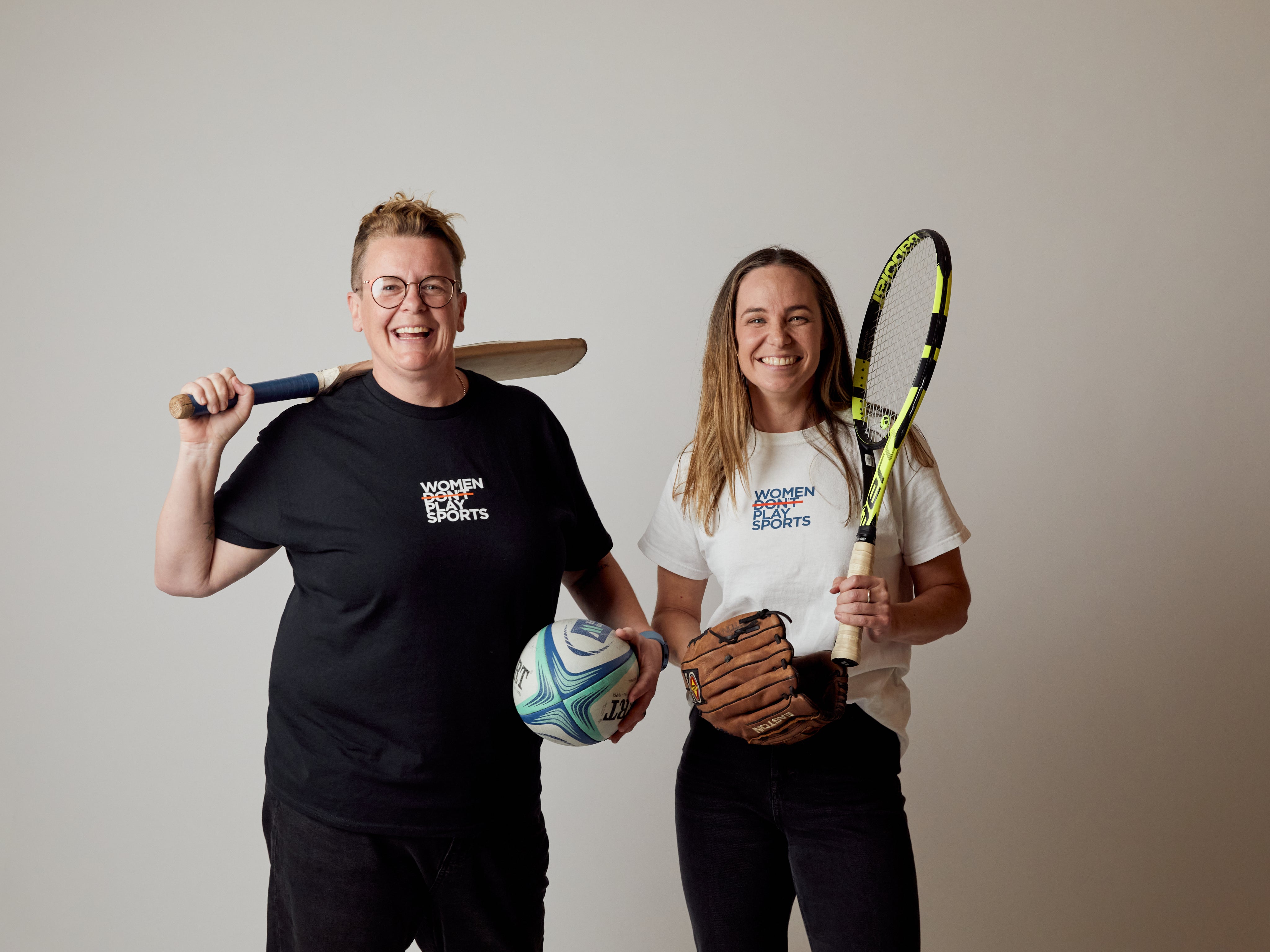
The most important example of all, though, is The Female Athlete Project.
"For us, a lot of our messaging on our t-shirts is for people to wear to make a statement and for those people more subtly being able to represent it." Chloe Dalton

3. From fitting into beauty norms, to redefining them
"Women's sport is now trying to drag beauty standards towards it, and beauty and fashion brands are having to adjust to that."
Patterns are emerging where women athletes are no longer trying to squeeze themselves into old beauty standards.
Athletes are now beauty authorities, not exceptions.
EXAMPLE: Ilona Maher wears red lipstick while she plays Rugby; she defines what strong and beautiful looks like in that space.
"You don't have to sacrifice your femininity to play any sport." Ilona Maher
Brands are moving into women’s sport on sport’s terms, where the cultural authority sits.
EXAMPLE: In September 2025, Mary Fowler made her runway debut at Paris Fashion Week. As a L'Oréal Paris ambassador, Fowler made history as the first professional footballer to walk a runway.
"Those moments just seem to carry a lot of power when it’s an athlete of her profile." Chloe Dalton
EXAMPLE: Fresh off their 2025 Cricket World Cup win, Harmanpreet Kaur, Shafali Verma, Deepti Sharma and Pratika Rawal of the Indian Women's Cricket Team, were featured on the cover of Vogue India.
“Again, it’s those cultural identifiers that the beauty brands are coming to the athlete, and the athlete doesn’t have to make radical changes in response to that.”
4. Athletes and fans are now designing the product
“Now both athletes and fans are using their power to shape what gets made, when it drops, and who benefits. It’s shifted from just taking whatever is available, to now pushing back if it doesn’t suit.”
Fans are forcing brands to listen to them.
EXAMPLE: During the 2023 FIFA Women's World Cup, supporters called on Nike to produce and sell replica goalkeeper jerseys [Mackenzie Arnold/ Mary Earps]. Due to high demand for a jersey that wasn't for sale, fans launched online petitions, which, along with public outcry, pressured Nike to release a limited number of goalkeeper jerseys for select national teams.
We’re also seeing athletes move from being the mannequin to the maker.
Coco Gauff co-designs what she plays in. She co-creates New Balance x Miu Miu outfits and each match kit is treated like a fashion drop.
Meanwhile, Sabrina Ionescu's Nike basketball shoes are the most-worn shoes in the NBA after Kobe Bryant's. Designed for athletes by athletes.
This extends into athletes launching their own beauty and skincare brands.
Ilona Maher's Medalist skincare, Naomi Osaka's Kinlò and Serena Williams' Wyn Beauty.
“It’s kind of changing the sector and the product in a way. When athletes are designing beauty products … it focuses on things more like performance beauty.”
5. Beauty and fashion as a new form of work for athletes
Tunnel fits are a new fashion destination.
WNBA and NWSL tunnel outfits are getting coverage and analysis in fashion media, sometimes reaching further than highlight reels.
EXAMPLE: In 2024, the Kansas City Current announced a one-year partnership with Nuuly, an online clothing rental subscription service. Nuuly was the presenting sponsor of the club’s “Match Day Arrival.”
So what, now what?
"This is a story of change that’s full of tension.
Women athletes are simultaneously rejecting objectification while building beauty brands. But also demanding performance focus while centralising fashion."
But do beauty standards contradict our approach that women’s sport is for everyone?
Is it just another example of the way a female athlete has to diversify their offering because what they produce on the field ‘isn’t enough’?
What is the future of women’s sports we want to inhabit? What stories do we want to see more of and less of?
