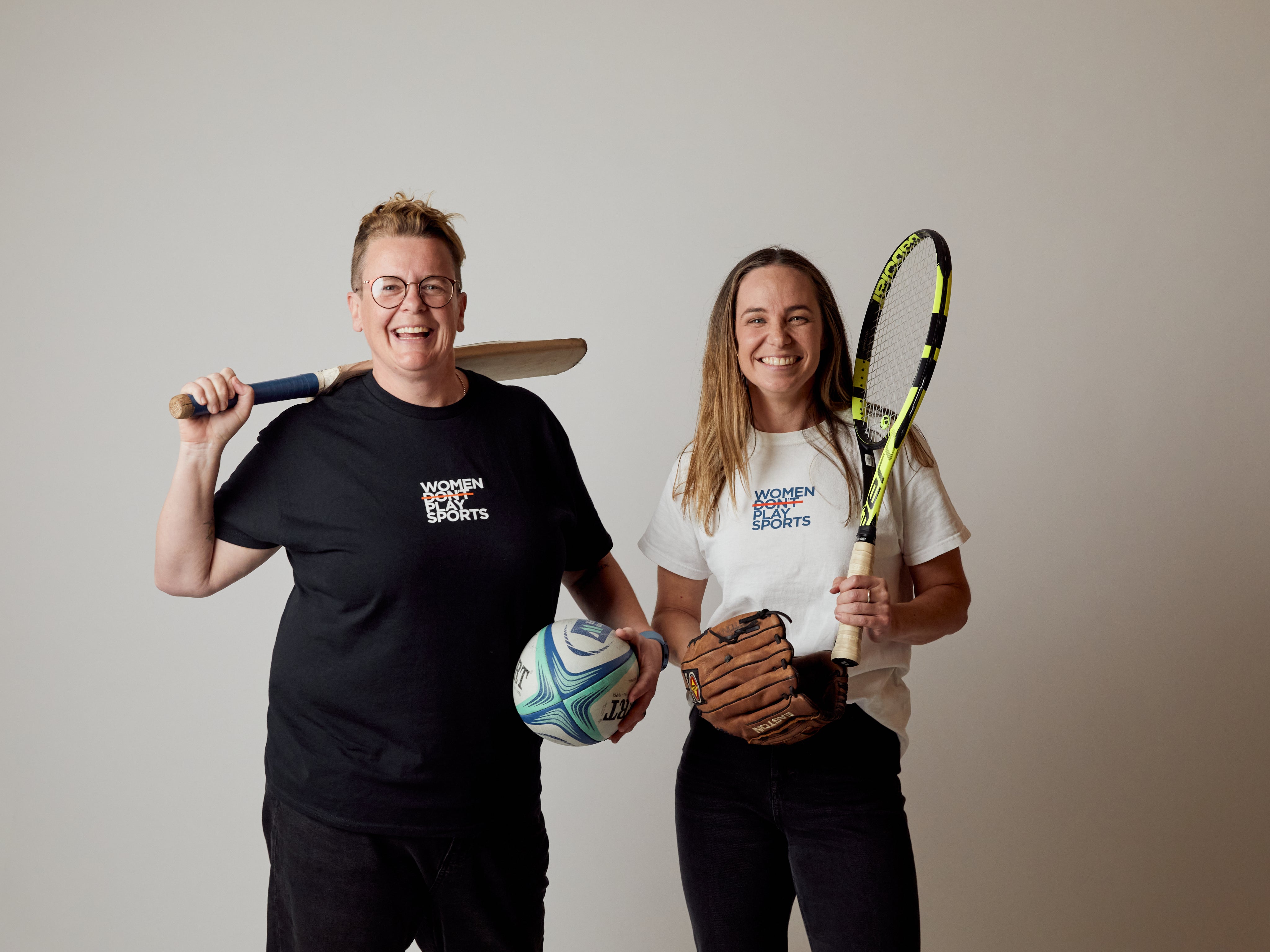

THE NEXT is a new monthly podcast from The Female Athlete Project.
Each episode, futurist and former athlete Reanna Browne joins Chloe and Bez to explore what’s changing in women’s sport, before it hits the headlines. We shine a light on the pockets of the future already here - the signals of change that are quietly [or not-so-quietly] reshaping women's sport in the present. Not to predict what’s coming, but to notice what’s already in motion.
What is Rea noticing? The Shadow System of Sport
“In this shadow system of sport, you can build your way up through attention and platforms. This is community sport entering its internet era.”
Here are four signals [pockets of this future in the present] that Rea is noticing this month:
1. Sport is no longer controlled by a single system
"For most of sport's history, sport was mostly controlled by clubs, leagues and broadcasters, and if you weren’t inside that system, you didn’t really exist."
But that’s what’s starting to change. Not in one way — but across multiple layers at once.
Now, more sport is being seen - not just at the elite level. But at the amateur, community and grassroots level too.
''There is a proliferation of AI cameras and low-cost broadcasting at every layer of sport, from junior sport to senior sport. Every part of sport is being recorded and seen."
EXAMPLE: AI Cameras like Pixellot and Veo are now being installed at local grounds, schools, and community venues. They produce and stream 19 types of sports automatically with graphics, ads, commentary and highlights.
On the plus side, the excuse that 'it's too expensive to film women’s sport' is becoming harder to justify. But it can raise privacy and safety concerns.
"Visibility for women's sport is becoming greater, but is that translating into financial benefits for both the leagues and the athletes?" - Erin [Bez] Morton

But it’s not just that more sports are being filmed. It’s that sport itself is also starting to be organised differently.
We're seeing a shift from club-facilitated participation to platforms and networks now coordinating participation.
"The little shift for me is that sport is not necessarily through clubs or leagues; it's actually platforms that are becoming the operating systems of those things. Think of Strava and ClassPass, where technology is now the reason we come together to play."
EXAMPLE: Badminton in Australia - huge numbers are connecting and playing outside of formal club structures. Participants are connecting via platforms [WhatsApp] so participation becomes platform-mediated.
You don’t need a club to organise sport AT SCALE anymore.
"The guardrails don’t exist around that space, so it can become dangerous around governance. At least with organised sports clubs, there are guidelines and ways that things are done." - Erin [Bez] Morton
But that's also because sport is being redesigned for attention. It's shifting from traditional formats to those built for entertainment, speed, and shareability.
Over 80% of Gen Z sports fans use a second screen during games. WSC Sports
The traditional broadcast is no longer the whole product
EXAMPLE: The Savannah Bananas are an exhibition baseball team based in Savannah, Georgia, United States. They play a variation of baseball known as Banana Ball, which emphasises showmanship, fan participation, and quick-paced games.
The Savannah Bananas get sold-out crowds, massive content reach [21 million followers] and the organisation is worth roughly US$500 million.
2. Sports clubs can become relevant before they become successful!
For most of sport’s history, Clubs became relevant by winning. And only then did they get attention, fans, and sponsors.
But now, attention is shifting from a vertical hierarchy to more of a horizontal distribution. Meaning, if we choose, we can watch club sport as much as we watch professional sport.
"You can be an amateur sports club and have a global following. You don’t have to be top-tier to have visibility and cultural relevance in the time of the internet. "
EXAMPLE: London-based football team, the Victoria Park Vixens formed via an Instagram post looking for women wanting to play football. They're now a recognised club with Nike collaboration and major media collabs.
EXAMPLE: Corinthians Women, the Brazilian women's football team, hase 2M Instagram followers and attracts record crowds. Women's football was banned by law in Brazil from 1941 to 1979. The women's team built a global following through content and community, not through broadcast.
"Our community sports clubs aren’t even necessarily tied to geography anymore."
Fans used to follow just their local club, and geography defined belonging. Now, we're seeing a shift to fans following identity, story and content - from anywhere in the world.
EXAMPLE: Hashtag United started as a YouTube team filming Sunday league football. They built 2.2M followers + 500M+ views → then entered the English league systems.
"You don't have to live near a club to belong to it. And you don't have to be top-tier to be culturally relevant. That's the shadow system in action."
3. Athletes can become visible before they're recognised
"The shift is that now you don’t have to be at the top of your game to get global visibility and recognition."
Traditionally, visibility came after the system recognised you, now athletes can become visible before the system validates them
EXAMPLE: Nafisa Ahmed is a freestyle footballer with1.6 million TikTok followers, 25.3 million likes [more than the official WSL accounts]. She's not in a professional league. but has an audience that professional leagues would kill for.
EXAMPLE: Freda Ayisi is a Ghanaian footballer who currently plays for Watford.
She has 436M TikTok views and signed to Hashtag United specifically because the club runs a digital-media-first model.
Athletic identity is no longer tied only to competition — it can be built through content.
4. Platforms are starting to do the work of clubs, leagues and broadcasters
“Sport is becoming more decentralised. It's almost like a shadow ecosystem that’s sitting off to the side.”
In the old system, sport was split across three roles: clubs organised who played, leagues structured competition, and broadcasters decided what got seen. No single layer controlled all three.
Platforms aren’t just entering sport. They’re starting to structure how it works.
Organising participation, Shaping competition, Controlling visibility and Capturing value.
So what, now what?
Does the shadow system give women's sport more control or just provide new ways to be extracted from?
Women's sport was locked out of the old system for so long. Less broadcast, less investment, less infrastructure, so it had to be built differently.

Leave a comment